Robot Vacuum Suction (Pa) Explained: What the Number Means
In this guide
Robot vacuum listings now lead with one number: suction in pascals, from about 5,000 Pa on entry models to 30,000 Pa and up on flagships. Here is what that number measures, what it leaves out, and how to use it without being misled. This explainer uses published standards and manufacturer listings checked on 2026-11-10; nothing was hands-on tested.
Disclosure: As an Amazon Associate I earn from qualifying purchases. Some brands featured below pay a bonus commission through Amazon Creator Connections. See /disclosure/.
Short answer: A robot vacuum’s Pa number is the maker’s claimed maximum suction pressure: how hard its fan can pull, quoted in pascals. No standard tells brands how to measure it, so 8,000 Pa on one robot is not comparable with 8,000 Pa on another. Brush, airflow and coverage decide pickup.
What a pascal is
The pascal (Pa) is the SI unit of pressure: one newton of force spread over one square metre (NIST Guide to the SI). It is a small unit. Standard atmospheric pressure is 101,325 Pa (NIST conversion factors), so a robot claiming 8,000 Pa is saying its fan can lower the pressure inside its air path by about 8 percent of normal air pressure.
Some useful conversions, by straight arithmetic:
| Claimed suction | kPa | Share of standard atmosphere | About psi |
|---|---|---|---|
| 5,000 Pa | 5 kPa | 4.9% | 0.73 psi |
| 8,000 Pa | 8 kPa | 7.9% | 1.16 psi |
| 10,000 Pa | 10 kPa | 9.9% | 1.45 psi |
| 20,000 Pa | 20 kPa | 19.7% | 2.90 psi |
| 35,000 Pa | 35 kPa | 34.5% | 5.08 psi |
When a robot “has suction”, air in the room is pushing into the low-pressure zone the fan creates. The bigger the pressure difference, the harder that push, all else being equal. But all else is rarely equal.
Pressure is only half of suction
A vacuum moves dirt with moving air. Two things set how much work that air can do: the pressure difference (Pa) and the volume of air moving per second (airflow). A fan that pulls a strong vacuum against a blocked inlet may move very little air once the inlet is open, and a fan that moves lots of air may not hold high pressure.
For conventional vacuums, the established test is ASTM F558, which measures air performance characteristics of upright, canister, stick, hand-held and other vacuum cleaners (ASTM F558). Its headline output, often called air watts, combines pressure and airflow. Robot makers almost never quote airflow, so a Pa figure alone tells you one side of the equation.
Why one brand’s 8,000 Pa is not another’s
None of the listings checked for this guide say how their Pa figure was measured: at which point in the air path, with the inlet open or sealed, at which power mode, or with a clean or partly loaded filter and bin. Without those conditions, two identical-looking numbers can describe different things. Treat any Pa figure as “maximum, best case, maker’s own method”.
Brands also frame suction differently, which shows the problem:
- uninell lists 5,000 Pa for the uninell UR1 robot vacuum and mop on Amazon, a budget gyro robot with carpet boost.
- Roborock lists 8,000 Pa for the Roborock Q7 L5 on Amazon, also with automatic carpet boost.
- iRobot’s Roomba 105 Combo listing on Amazon gives 7,000 Pa in its highlight line, but its main bullet says “70X more power-lifting suction” compared with iRobot’s own older Roomba 600 series, a relative claim that cannot be compared with anyone else’s number.
- Shark’s Matrix Plus UR2650WS listing on Amazon gives no Pa figure at all; it quotes a carpet-cleaning improvement over an older Shark model on a level-loop carpet sand test.
All four are claims checked on the Amazon listings on 2026-11-10. None is a third-party measurement.
What the robot vacuum standard actually measures
There is an international test method for robot vacuums: IEC/ASTM 62885-7, “Dry cleaning robots for household or similar use: Methods for measuring the performance” (consolidated edition 1.1, 2022). Its scope is to specify the performance characteristics of interest to users and how to measure them. It covers straight-line tests removing different kinds of debris from hard floors and carpets, a test removing fibres from carpets, and energy consumption. It replaced the earlier IEC 62929 and is “neither concerned with safety requirements nor with performance requirements”, meaning it sets how to test, not a pass mark (IEC webstore). The 2022 amendment specifies test carpets from a Wilton weave through level loop and medium-pile plush to high-pile shag.
The notable gap: it does not define a suction-pressure rating. The test that matters to users is how much debris comes up, and that is not what the Pa number on the box reports. Consumer listings rarely quote 62885-7 results, so you usually cannot compare them either.
What actually decides pickup
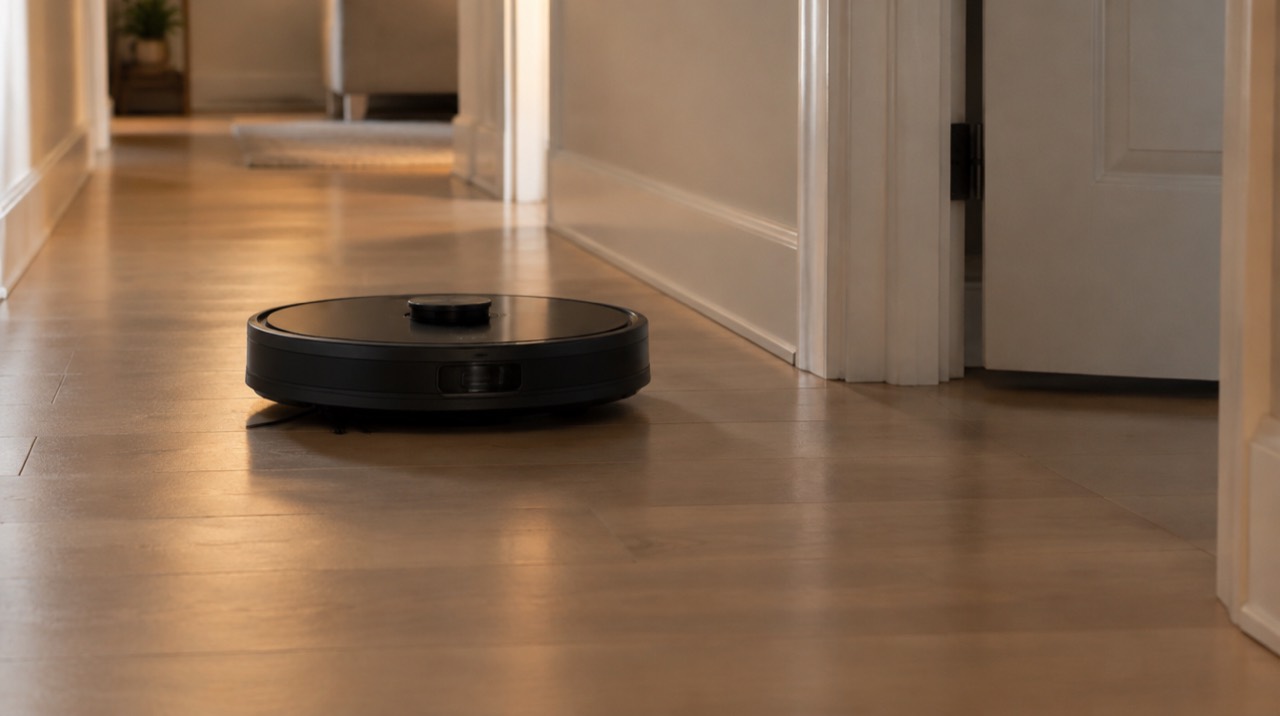
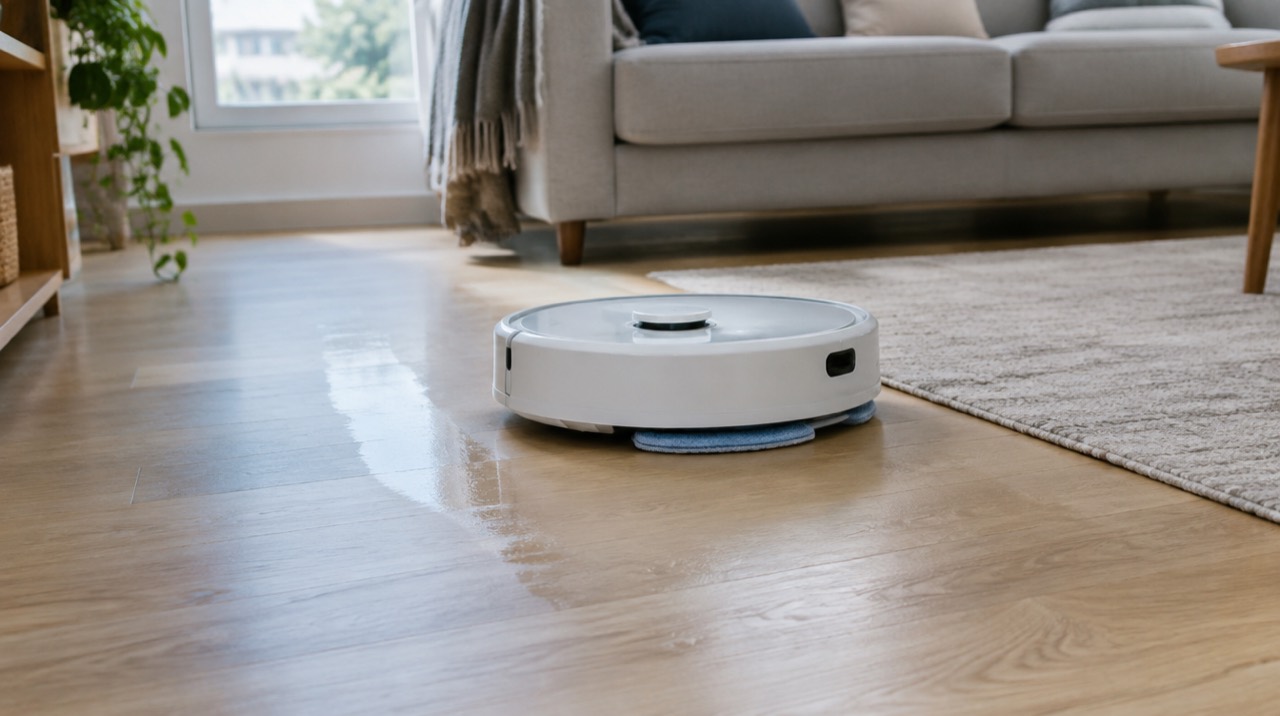
On hard floors, most debris sits on the surface. Edge cleaning, side-brush design, and whether the robot covers every strip of floor matter more than raw pressure. A lidar robot that cleans in tight, overlapping rows will usually leave less behind than a stronger robot that misses strips; see lidar vs camera vs gyro navigation.
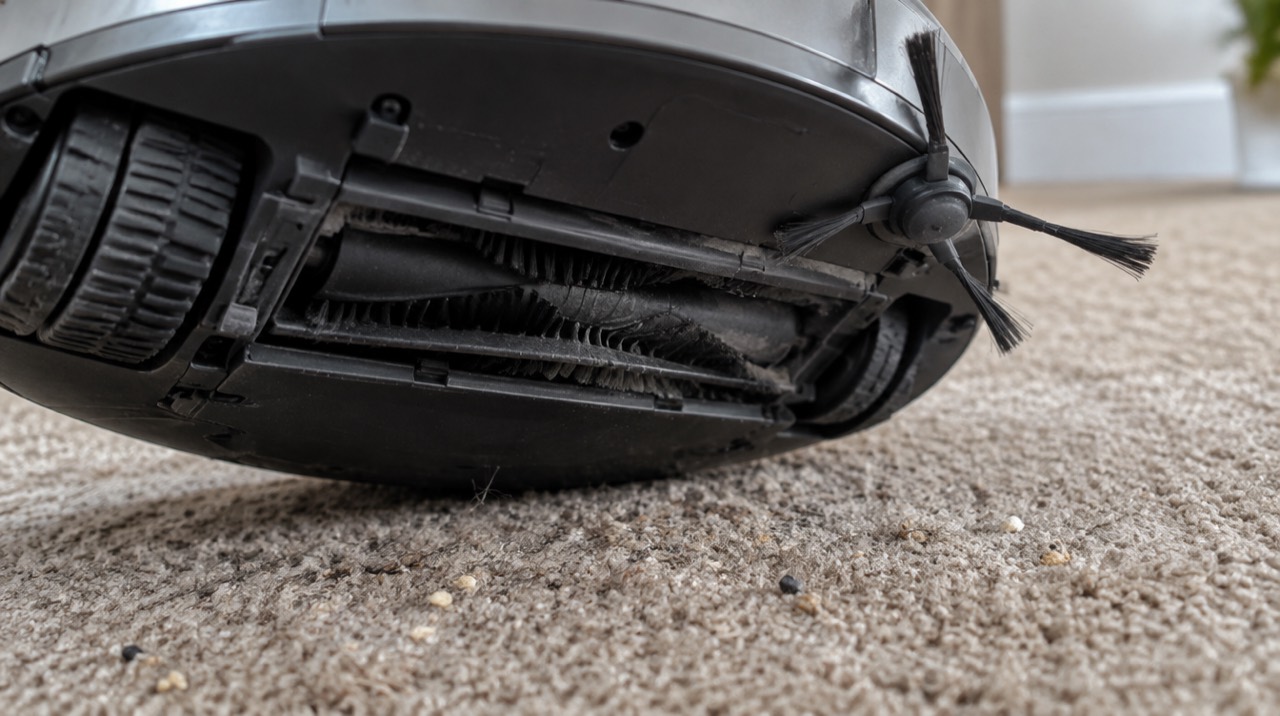
On carpet, fine dust and grit sit down in the pile. The brush roll has to agitate the fibres and the inlet has to sit close enough for airflow to carry dirt out. Automatic carpet boost raises fan power when the robot senses carpet. For dense or deep pile, brush design and the robot’s ability to climb onto the rug can matter more than Pa; robot vacuums for thick carpet covers that.
With pets, hair wraps around bristle brushes and chokes airflow long before suction is the limit. Anti-tangle or rubber brushes and an often-emptied bin help more than an extra few thousand Pa; see the best robot vacuum for pet hair.
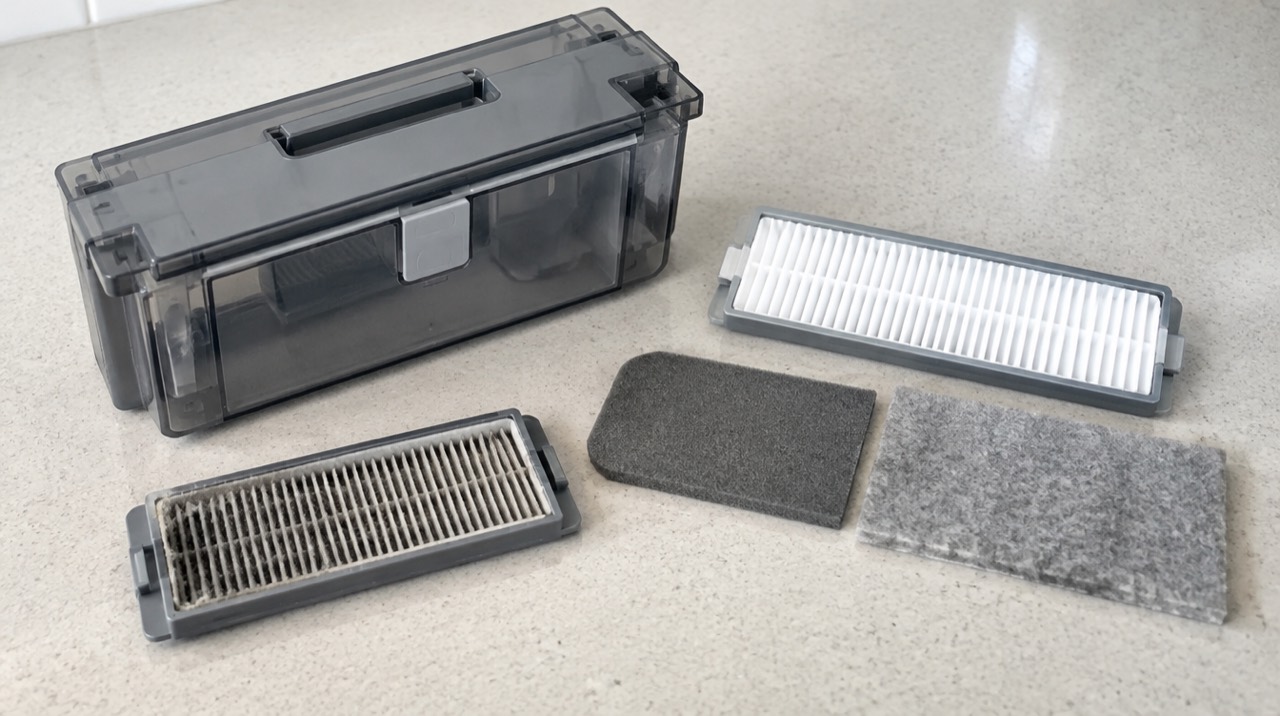
Over time, a clogged filter or full bin cuts airflow. That is why maintenance shows up in performance: our guide on how often to replace robot vacuum filters and brushes gives the maker intervals.
How to use the Pa number when you compare
- Compare within a brand, not across brands. A maker’s own range probably uses one method, so its 8,000 Pa model likely pulls harder than its 5,000 Pa model.
- Use rough tiers across brands. Listings checked on 2026-11-10 ran from about 5,000 Pa on entry robots to 18,500 Pa on mid-range combos and 35,000 Pa or more on flagships. Moving up a tier is a real hardware difference; a gap of 10 or 20 percent is noise.
- Look for carpet boost. It matters more for carpet than the peak number.
- Check the brush. Anti-tangle, rubber or dual-roller designs suit hair and carpet.
- Weigh navigation. Full coverage beats raw power on most floors. Our best budget robot vacuum and mop combo picks show how navigation separates robots at similar Pa.
- Expect the top setting to cost runtime and noise. The listings checked do not say which power setting their runtime figure assumes, so do not combine “maximum Pa” and “maximum minutes” in your head.
| What you see on the listing | What it tells you | What it does not |
|---|---|---|
| “8,000 Pa max suction” | Maker’s claimed best-case pressure | Airflow, test method, pickup |
| “Carpet boost” | Fan power rises on carpet | How much, or for how long |
| “X times more suction” | Improvement over that maker’s older model | Anything about other brands |
| “Tested per IEC 62885-7” | Standard debris pickup method was used | A ranking, unless results are given |
| Runtime in minutes | Maker’s figure, power setting usually unstated | Runtime at maximum suction |
When the Pa number is genuinely useful
Pa is not useless; it is just narrow. It helps in three situations:
- Choosing between models in one brand’s line. Roborock’s own 8,000 Pa and 10,000 Pa models were very likely measured the same way, so the gap is probably real, even if you cannot translate it into pickup.
- Spotting a tier change. A jump from around 5,000 Pa to 15,000 Pa or more generally signals a different class of robot rather than a tweak; on the listings checked, the higher-Pa models also tended to come with bigger docks and different mop systems.
- Reading a robot’s own power modes. Many apps name suction levels (quiet, standard, turbo, max). The Pa claim applies to the top level; the everyday setting you leave it on will be lower, quieter and gentler on battery.
What Pa cannot do is settle “Roborock or iRobot” or “Shark or uninell”. For that, compare navigation, brush design, mop design, height and upkeep, the things a listing states plainly.
Mistakes to avoid
- Treating Pa as a cleaning score. It is a pressure claim with no shared test.
- Paying for Pa you will not use. If you run the robot on its normal setting most of the time, the maximum figure is rarely in play.
- Ignoring the filter. A blocked filter drops airflow; clean and replace it on schedule.
- Comparing relative claims. “2X” or “70X” are against the same brand’s older robots.
- Skipping navigation and brush design. They decide what is left on your floor more often than suction does.
Frequently asked questions
What does Pa mean on a robot vacuum?
Pa is the pascal, the SI unit of pressure, equal to one newton per square metre. On a robot vacuum it is the maker's claimed maximum suction pressure: how much lower than room air pressure the fan can pull. It is a claim, not a standardized test result.
Is higher Pa always better on a robot vacuum?
No. Pa measures pressure only, not airflow, brush contact or how well the robot covers the floor. No standard tells brands how to measure it, so two robots with the same Pa can clean very differently. Use it as a rough tier within one brand's range.
How much suction does a robot vacuum need for carpet?
There is no verified Pa threshold for carpet. What helps on carpet is automatic carpet boost, a brush roll that reaches into the pile, and passes over each area. For thick or shag rugs, look at brush design and clearance before the Pa figure.
Is there a standard test for robot vacuum cleaning performance?
Yes. IEC/ASTM 62885-7 sets methods for measuring how household dry-cleaning robots pick up debris and fibres from hard floors and carpets, and their energy use. It does not define a suction-pressure rating, and consumer listings rarely quote its results.
What is the difference between Pa and air watts?
Pa is pressure. Air watts combine pressure with airflow, which is how ASTM F558 rates the air performance of conventional vacuum cleaners. Robot makers usually quote only Pa, which leaves out airflow, the other half of the picture.
Keep reading
- Lidar vs Camera vs Gyro Robot Vacuum Navigation
Lidar vs camera vs gyro robot vacuum navigation: how each one finds its way, what it can and cannot do, and which suits your home's size, lighting and clutter.
Updated Nov 2026 - Best Budget Robot Vacuum and Mop Combo: Spec Picks
The best budget robot vacuum and mop combo for your floors, compared on navigation, mop design, height and upkeep. Spec-based picks from Roborock, iRobot and Shark.
Updated Nov 2026 - Shark IQ Filter Replacement: Which Filter Fits and When
Shark IQ filter replacement: the three filters in an IQ Self-Empty robot and base, Shark's part numbers and intervals, and what to know about non-Shark filters.
Updated Nov 2026